
How to Search Cases by Name
Clay County offers no countywide name-search form that anyone can use anonymously. Remote viewing of an eligible Circuit or Chancery case starts one way. It requires a registered Public Access to MEC account. There is no public search box on a landing page. Justice Court and West Point Municipal Court matters are different. Neither has an official public case-search form at all. So begin with the court that received the filing. Use the party or case style only where the authenticated interface permits it. A common name alone can pull up the wrong matter. A missing result may simply mean one of three things. The case sits in a different court, is restricted, or predates the online system.
- Identify whether the matter belongs in Circuit, Chancery, Justice, West Point Municipal Court, federal court, bankruptcy, or an appellate court.
- Use the official MEC/PAMEC route for eligible Circuit or Chancery remote access, with the court and case type written down first.
- Search by the exact case number before trying party or style information, then narrow by date only if the authorized interface offers that option.
- For Justice or Municipal Court, call or visit the responsible clerk with the party name, citation or case number, and approximate date.
- Record the court, case number, displayed flag, and event date, then verify an important result with the clerk or original order.
The inventory lists only the controls visible in the local access routes. It invents nothing. Fields that require an authorized account are left out rather than guessed at, so no name, court, case-type, date, or pagination filter is invented here.
| Portal or route | Field or control | Type | Required? | Observed behavior |
|---|---|---|---|---|
| Sixteenth Circuit MEC CourtInfo | CourtInfo context | Informational page | No | Shows Clay Circuit details and flags, but no public search fields. |
| Fourteenth Chancery MEC CourtInfo | CourtInfo context | Informational page | No | Shows Chancery context, not an anonymous search form. |
| MEC/PAMEC login | Username | Text | Yes | Account identifier; anonymous search is not offered there. |
| MEC/PAMEC login | Password | Password | Yes | Account credential. |
| PAMEC registration | User type | Select | Yes | Attorney, Non-Attorney, or Firm Administrator. |
| PAMEC search output | Case number, party, date filters | Not captured | Unknown | Exact filters require authorized paid access and were not inferred. |
| County Daily Docket PDF | Date, term, section | Printed headings | N/A | A static calendar-like document, not a search interface. |
Note: Court staff can explain the access route and current procedure. They cannot decide a case outcome or give legal advice.
Clay County Case Lookup Requires PAMEC
PAMEC login is the public doorway into the Mississippi Electronic Courts system. The login screen wants a username and password, with recovery links nearby. Registration is not a free pass. Official terms charge an annual access fee for applicable users. Each generated search-output page costs $0.20. A one-page no-match result still counts as a page. PAMEC gives public access to MEC. Full MEC filing privileges go to registered or authorized users. A public account cannot open every filing. Do not assume it can. The official PAMEC login page for this Clay County case lookup reference appears next.
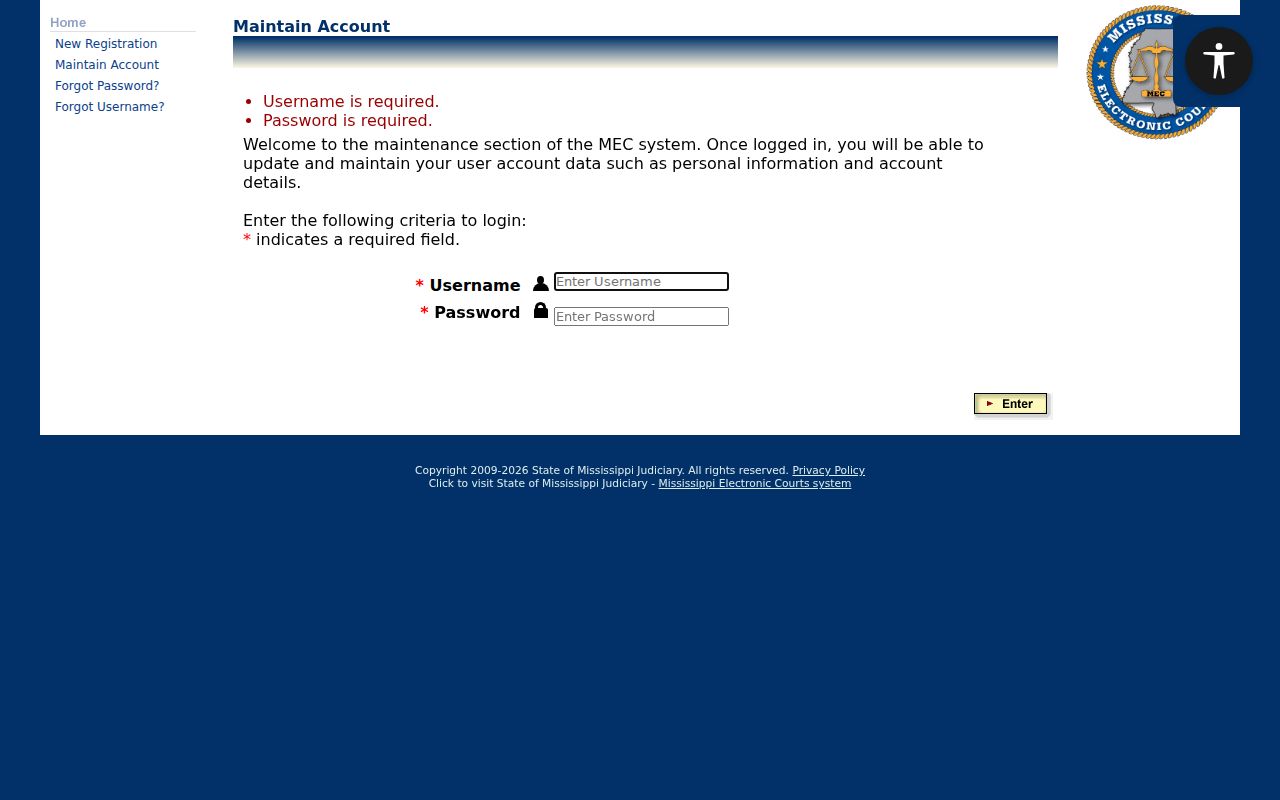
That credential gate is why no anonymous Clay County case search field list can be promised.
How to Search by Case Number
A case number beats a name as a starting point. It pins down one court file instead of every party who shares a surname. A dated Clay Circuit Daily Docket shows criminal examples like 23-CR-041K and 20-CR-080K. The pattern seems limited. It uses a two-digit year, CR, a sequence, and a final letter. That is Circuit criminal format only. The official material never decodes the terminal letter. It also says nothing about Chancery, Justice, Municipal, or federal numbering. Keep the court name beside the number whenever you request a search. One more wrinkle matters. A Circuit appeal from Justice or Municipal Court can create a second, separate Circuit record. An appeal may look possible. Then ask both the originating clerk and the Circuit Clerk whether a separate case number was assigned.
Clay County's Two MEC Routes
Clay County dockets live on two separate MEC sites. Circuit cases sit in the Sixteenth Circuit MEC environment. Chancery cases sit in the Fourteenth Chancery MEC environment. The CourtInfo pages are distinct endpoints. A match in one says nothing about the other. A no-match result there tells you nothing either.
Circuit custody covers felony criminal cases, Circuit civil files, and specified appeals. Chancery custody covers family, probate, guardianship, land, and equity matters, and some of those files carry access limits even when the case shell is public. So knowing which court holds the Clay County court docket you need is half the search.
Before you can run any docket search, you need an account. The PAMEC registration information page lists the fields an account holder supplies: name, date of birth, primary email, username, password, and security settings. Those are sign-up fields only, not case-search filters.
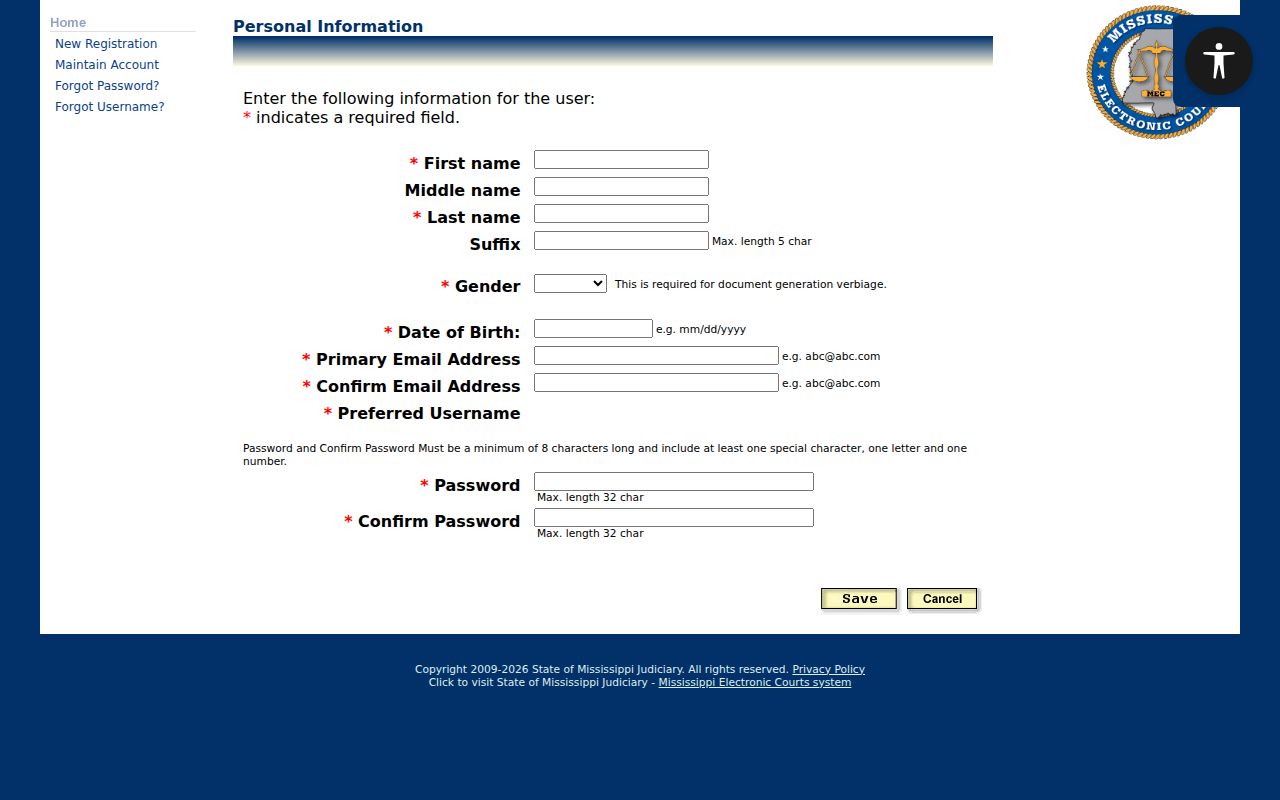
Keep account information and case identifiers separate. The registration screen makes that distinction easy to see when you sit down to locate a docket.
What a Case Search Shows
When an authorized search returns a case, save only what identifies the public record. The documented workflow points to the court, case number, case style, case type, filing date, status or flag, docket events, document number, event date, and any restriction message shown. Exact layouts and filter labels stay behind the login. Read docket events with care. An entry proves something was filed or set. It does not explain the event or replace the underlying order.
| Court | The court system holding the displayed case, such as Circuit or Chancery. |
|---|---|
| Case number | The court identifier, best used with the court name. |
| Style and case type | The caption and record category shown by the authorized output. |
| Filing date | The displayed filing date, not necessarily a hearing date. |
| Status or flag | A label such as Closed, LegacyCase, or a pending flag that needs context. |
| Docket event and document number | Recorded event information when the account permits viewing. |
| Restriction message | A displayed notice such as restricted, sealed, or no permission to view. |
PAMEC organization registration also collects organization and contact data when that account path applies. It grants no broader access to protected records.
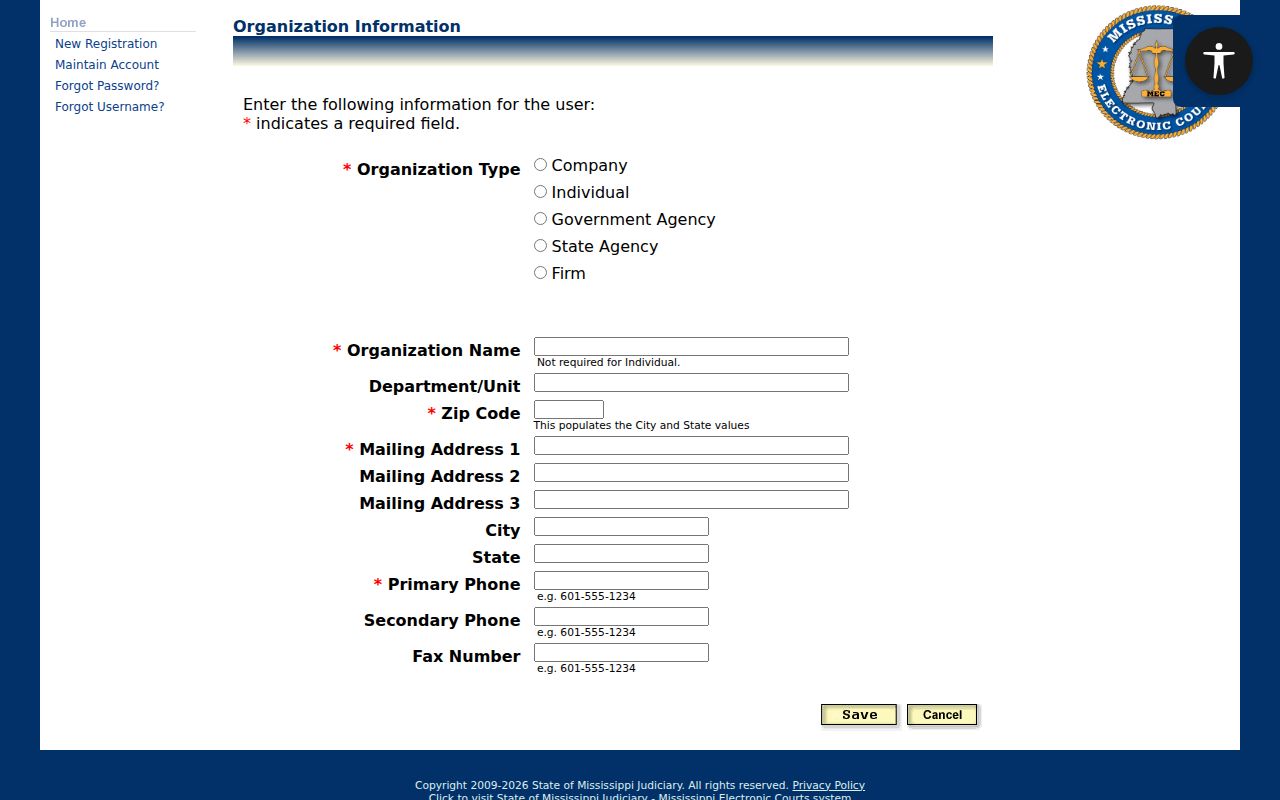
Personal or organizational, the account type does not decide access. The court's restriction message controls the particular document.
Clay County Case Lookup Flags Need Context
The Sixteenth Circuit CourtInfo material lists several useful flags. None is an outcome by itself. A flag may mark a pending procedural event, a financial condition, a case state, or a data-migration artifact. Read the docket entry and the order, or ask the clerk which record you need, before treating a label as a final result.
- Arraignment Pending
- A flag that the arraignment event or order remains pending, not a statement of guilt.
- BOUND OVER
- A lower-court preliminary result moving a felony matter toward Circuit Court, not a conviction.
- Final Judgment Issued
- A signal that a judgment event appears; obtain the judgment and check later appeal or status entries.
- LegacyCase
- An older or migrated data category, not an outcome.
- SEALED or Sealed_Case
- A public-access restriction. Missing details should not be inferred.
PAMEC terms govern remote access and billing, and they bar automated scraping outright. Those terms never turn a docket flag into a legal conclusion.
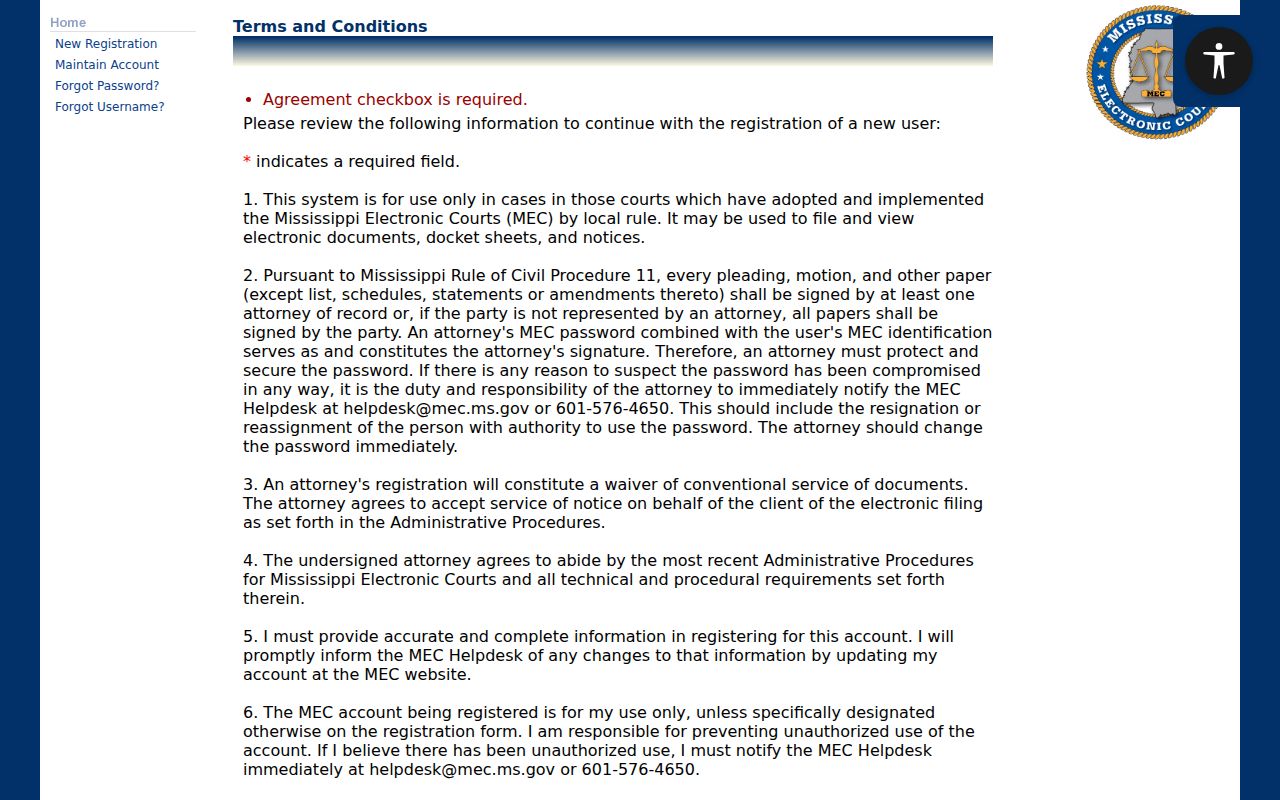
The terms screen reinforces that public access still follows system conditions and court restrictions.
County vs Statewide Case Search
Mississippi offers no free, anonymous way to search every Clay County docket at once. The state system family, MEC and PAMEC, serves participating courts. Circuit and Chancery routes still run through districts. Justice Court and West Point Municipal Court are different. No anonymous case-search form exists for either, so a Clay County clerk is the route. The county sometimes posts a Daily Docket or Progress Sheet PDF. Those are dated snapshots of the court record. They are not a full index.
| Remote MEC/PAMEC route | Clay County clerk or court route |
|---|---|
| Eligible Circuit and Chancery electronic cases in separate district systems. | Circuit, Chancery, Justice, or Municipal Court staff identify local paper, terminal, archive, and copy options. |
| Requires registration and can carry annual and search-output charges. | Public electronic access at a clerk or courthouse terminal is the practical free-access alternative during regular hours. |
| Can show a case shell while restricting documents or categories. | Staff can explain a restriction, certification route, or archival request. |
| Does not search federal, bankruptcy, or Fifth Circuit cases. | Does not hold federal records. |
PAMEC payment information lays out the ways to pay for remote access. Debit, credit, and e-check work online. A mailed check is slower and delays your access. Third-party processing charges can apply, so confirm the current terms before paying.
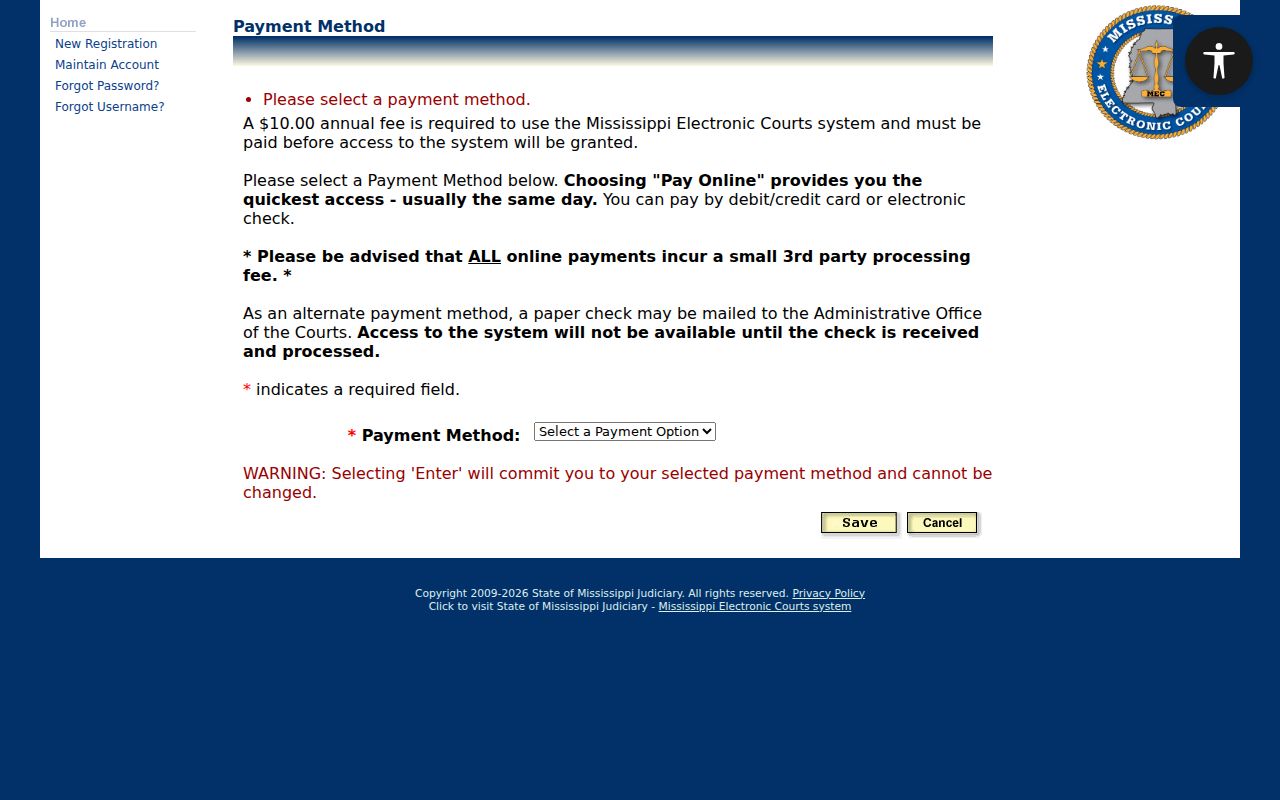
Those payment options cover remote PAMEC access only. They do not create a general anonymous search of county records.
Clay County Case Lookup at a Terminal
When remote PAMEC access will not work, the courthouse terminal is the answer. The state model is simple. Electronic access at a clerk's office or courthouse is free during regular hours. Fees apply only to remote use. The Circuit Clerk office holds Circuit civil files, criminal files, and appeals. Chancery files sit with Chancery Clerk LaFrance Hamilton Boyd's office. Clay County has not published the terminal count. The software screens and the list of restricted documents available there also stay unpublished. Call ahead with the case number and the court level.
Note: Bring only the case details the search needs. Ask the clerk whether a plain docket printout, a document copy, or certification is available.
Restricted Cases and Access Rules
Mississippi's judicial public-record policy favors openness, with rule-based and legal exceptions carved out. The Mississippi Public Records Act guidance gives a general access framework. A court-file request also runs through judicial policy and procedural rules. Confidentiality law and the clerk's certification process apply too. Seeing a case number or a docket header does not unlock a protected document. Ask which restriction applies. Ask whether a redacted copy exists. Find out whether a court order or special procedure is required.
Restricted records: Youth Court, sealed or expunged matters, family and domestic-abuse records, mental-health proceedings, and protected personal information may have separate access rules. Mississippi Code section 43-21-261 is the cited youth-record confidentiality authority, and section 99-19-71 addresses expungement procedure. Confirm current law and the clerk’s process before seeking a restricted record.
A no-permission message is a boundary. It is not proof the case never existed. Also, never copy or try to rebuild private details from court material: names, dates of birth, addresses, medical facts, minor information, account numbers, or protected victim information.
Clay County Case Lookup Excludes Federal Dockets
Federal cases tied to Clay County live elsewhere. The trial route is the U.S. District Court for the Northern District of Mississippi, Aberdeen Division. Access runs through PACER and CM/ECF. Take 1:26-cv-00172-SA-RP, a federal example. That is not a Clay Circuit number and should never be entered as one. Bankruptcy records and Fifth Circuit appeals use their own federal routes too. A Clay clerk cannot certify a federal file. PACER, in turn, returns no Clay Justice Court or West Point Municipal Court records.
Clay County Case Lookup for Legacy Files
Old files can sit in storage without ever becoming an online scan. County retention notes list some permanent items. These include docket books, minute books, abstracts, and judgment rolls. Other files follow schedules measured in years and may need approval before disposal. Retention is not the same as public availability. Give the clerk the approximate filing year, the originating court, the case-number pattern, and the exact record type. That lets staff check a legacy system, archive, or paper file. A legacy label or a missing scan says nothing about the outcome.